


Filed in Featured Destinations, Travel Tips — October 19, 2026
Before You Buy in India: A Collector’s Briefing
Practical shopping in India tips for shawls, carpets, gems and handicrafts, from a September trip and a gemologist’s habit of asking one more question.
India is one of the great shopping countries in the world. Its artisans work at a level of skill, and for a price, that no Western workshop can match. It is also a country where showroom claims run well ahead of the truth.
This is the briefing we give clients before they go. It comes from a September trip across Rajasthan, Agra and Delhi, and from a gemologist’s habit of asking one more question.
Shawls: know your microns
Fine pashmina, from Himalayan goats, bottoms out at around 12 microns in fiber diameter. If a seller tells you a shawl is 9 microns, one of two things is true: the claim is inflated, or the shawl is shahtoosh, woven from the Tibetan antelope. Shahtoosh is banned from international trade and illegal to bring into the United States.
Be wary of names that sound like it. “Pastoosh” is not a standard fiber name and is often used to suggest shahtoosh. Buy pashmina labeled and invoiced as pashmina, and treat any “toosh” pitch as your cue to leave.
Carpets: photograph everything
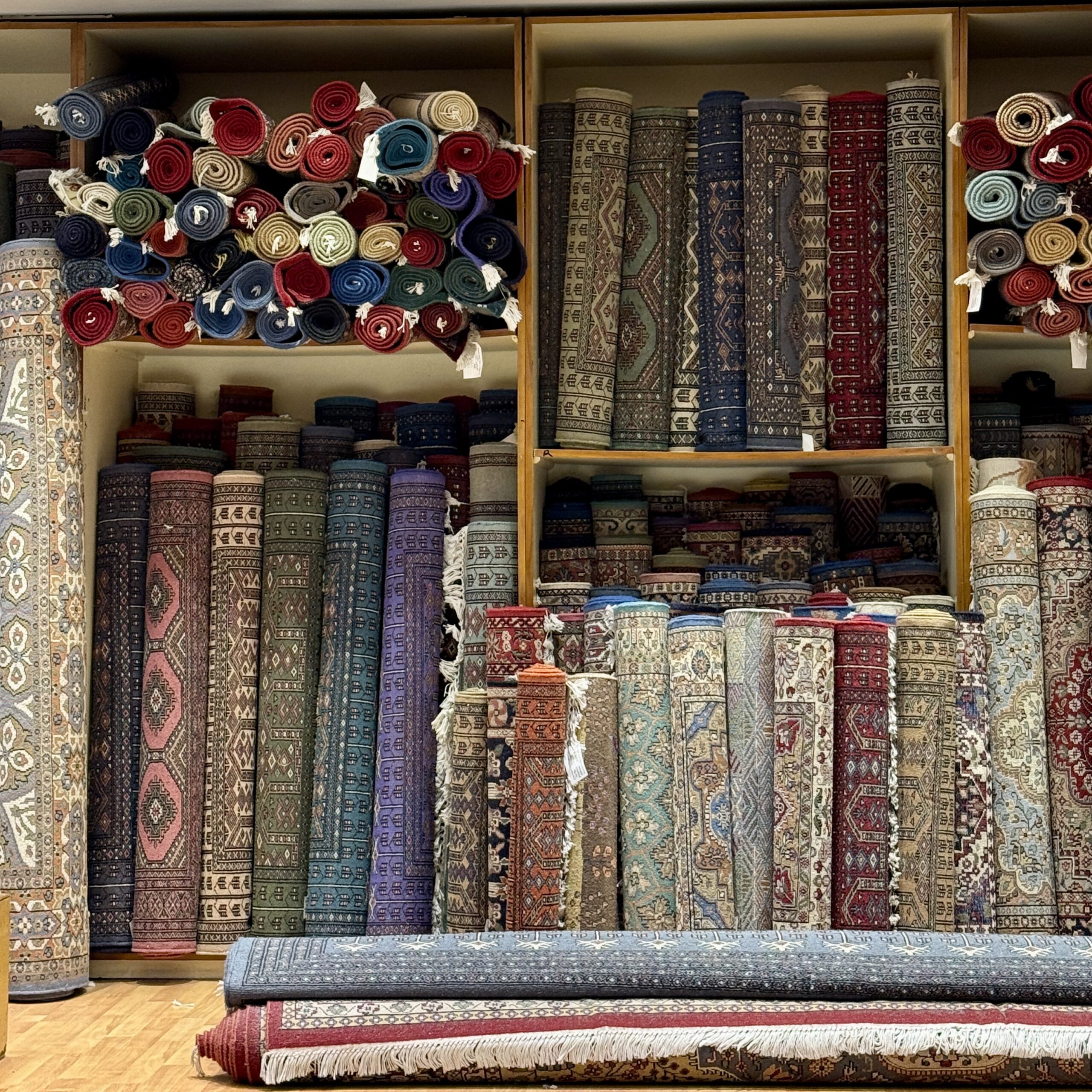
Jaipur’s hand-knotted carpets are extraordinary, and shipping to the US is routine. So is substitution. Before you pay:
- Photograph the specific carpet, front and back, including any tag and the knot count.
- Make sure the invoice describes the piece exactly.
- Check the carpet against your photographs on delivery, before you sign for it.
Treat the sales script as script. “This would cost $35,000 in Turkey” is an anchor, not a fact. Natural dyes do fade in strong sun. The famous burn test is real in principle (wool and silk char and self-extinguish, synthetics melt), but it proves the fiber, not the quality.
Gems: the right question, and the right paperwork
- Ask the right treatment question. “Heated, not synthetic” is a sapphire answer. For emerald, ask about oil or resin clarity enhancement.
- Get a proper invoice. India charges 3% GST on jewelry. A dealer who offers to waive it may leave you without a tax invoice, and you want an itemized one for your customs declaration.
- Refuse the detour. Jaipur’s gem-export scam is still active and aimed squarely at confident buyers. If a driver suggests a stop at a “government emporium,” decline.
- Know what’s a bargain and what isn’t. The real value is in labor (kundan, meenakari, hand-setting) and in loose colored stones, especially emerald. Gold and diamonds cost what they cost everywhere. (See A Gemologist Goes to Jaipur.)
WEEKLY WANDERLUST
My India notes keep coming, every Friday.
Weekly Wanderlust is my letter from the road: what I learn while traveling, including the shopping lessons I’d rather you learn from me than from a showroom.
Handicrafts: beware “no duty”
In Agra, marble inlay workshops and embroidery houses often promise that shipped pieces arrive free of customs duties “because it’s handicraft.” Don’t rely on it. Duty treatment depends on what the item is and how it’s classified, and that is a question for a customs broker, not a salesperson.
The shipping itself is usually well handled: FedEx or DHL, two to six weeks, insured. Ask for the insured value in writing.
Tax refunds: don’t count on one
Unlike Europe, India has no reliable tourist tax-refund scheme. Budget as if the price you see is the price you pay.
Guides, commissions and trust
Most guided shopping stops in India pay the guide a commission. That’s normal, and it doesn’t mean the shop is bad. Several of our best purchases came from guide-arranged workshops. It does mean the shop was chosen partly for the guide’s benefit. For significant purchases, ask your advisor to arrange the introduction in advance; it’s the kind of thing we set up for clients.
The short version
- Pashmina, not “toosh.”
- Photograph the carpet.
- Ask about emerald oiling.
- Get the invoice.
- Skip the emporium.
- Ask a broker about duty.
Shopping around Amber Fort or the Taj? Read what to wear at Amber Fort and why the Taj Mahal’s Friday closure shapes your Agra days.
WEEKLY WANDERLUST
Save this list, then get the next one in your inbox.
Weekly Wanderlust is my Friday letter, where I share what I learn on the road: the details that never make the brochure, and the trips worth planning next.
Planning India for 2027?
I traveled as a guest of this trip’s partners at trade rates, and I may earn a commission when clients book. My recommendations are my own.


