


Filed in Featured Destinations, Travel Tips — October 19, 2026
A Gemologist Goes to Jaipur: Why the Real Value Isn’t the Stones
Jaipur gem shopping, through a trained gemologist’s loupe: where the value really is, what is never a bargain, and how not to get taken.
Within an hour of arriving in Jaipur, someone will tell you it is the emerald capital of the world. It’s close enough to true. It’s also the least useful thing you can know before you shop.
I trained as a gemologist, and I went to Rajasthan this September with a loupe in my bag and a professional’s suspicion of bargains. Here is what I’d tell anyone before they spend serious money in the Pink City.
The city that owns “the rest”
The colored-stone world divides neatly. Thailand and Sri Lanka dominate sapphire and ruby. Surat, in Gujarat, cuts the world’s diamonds. Jaipur owns nearly everything else, and emerald above all.
Gem and jewelry exports from the city passed $2 billion in fiscal 2024-25, and a dedicated colored-stone bourse, the first of its kind anywhere, is due to start phased possession in 2028.
Two businesses operate here, and visitors routinely confuse them. Cutting still runs through large factories and a vast cottage network of contract artisans. Fabrication, turning stones into finished jewelry, moved to the Sitapura industrial belt, where CAD lines look nothing like the old city. Meanwhile, in the lanes off Johari Bazaar, kundan and meenakari workshops still work much as they did in the 1700s.
Where there is no bargain
Three things cost the same in Jaipur as anywhere else:
- Gold. You pay the global spot price plus India’s import duty on metal. The number doesn’t change because you’re in India.
- Diamonds. Priced as a commodity worldwide, and that’s Surat’s trade, not Jaipur’s.
- Designer collections. The great houses price their signature lines for a global clientele. Buying them in Jaipur gets you better provenance and a better memory, not a discount.
Where the value actually is
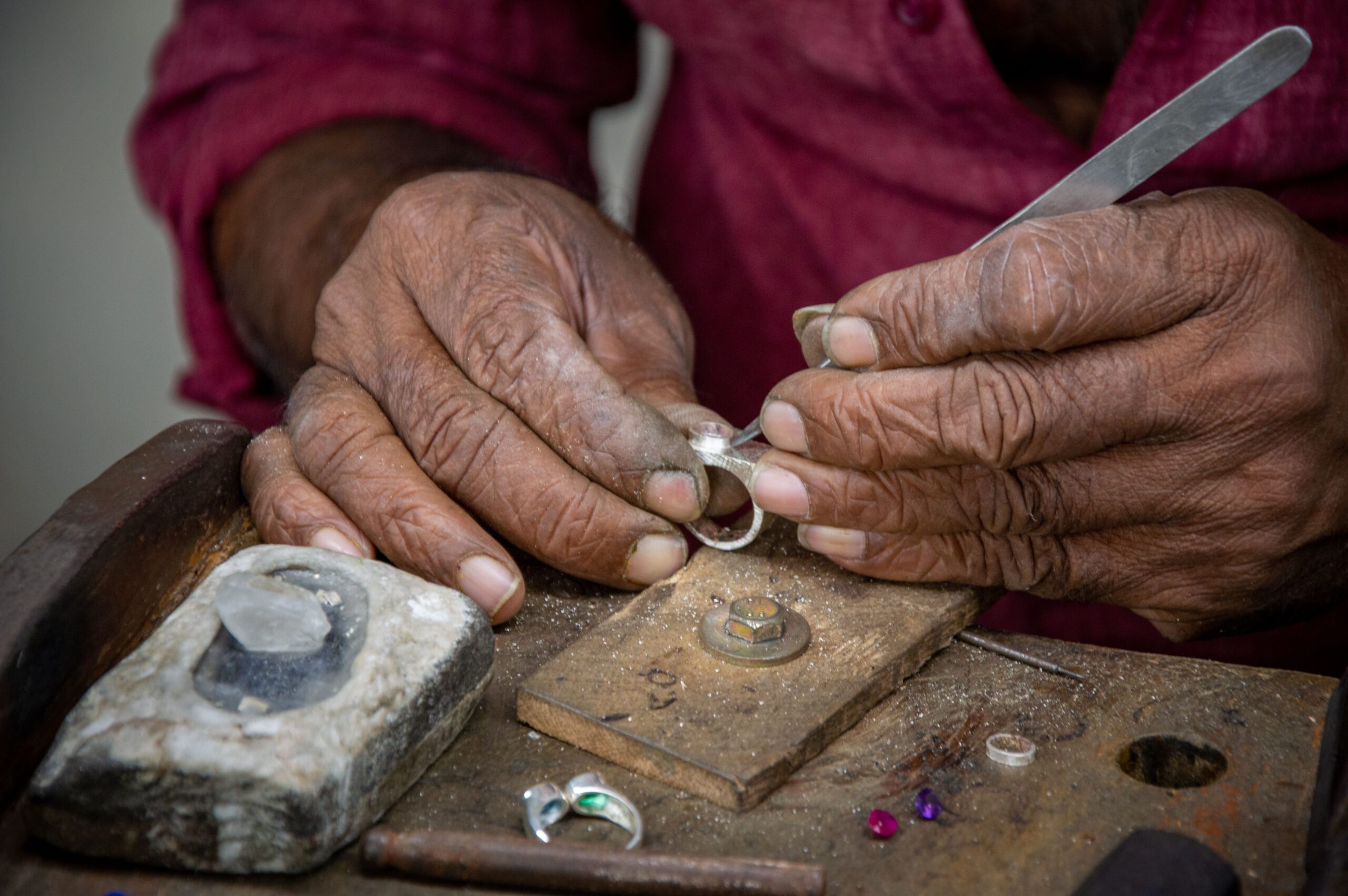
The arbitrage is labor. Hand-setting, kundan, meenakari enameling and jadau work involve bench hours that cost a fraction of American or European rates. A heavily worked piece that would be prohibitive from a US house becomes attainable. That’s the real story.
In practice, that means three categories:
- Loose colored stones, especially emerald: cut here, as close to the source as you can buy.
- Antique and contemporary silver.
- Mid-tier kundan and enamel work, where the labor differential does the most.
I saw the labor advantage at work in Udaipur. A family-run gem house showed me an antique emerald, diamond and pearl necklace with a tassel that I loved, except for an opal I didn’t. By that evening, the opal was gone, the tassel was reset on a new 18-inch chain, and the piece was hand-delivered to our hotel lobby for inspection before the courier left. At home, bench work like that means a repair ticket and a wait.
One professional note: when a dealer tells you stones are “heated, never synthetic,” that answers a sapphire question. For emerald, the question to ask is about oil or resin clarity enhancement.
WEEKLY WANDERLUST
More of my gemologist’s notes from the road go to Weekly Wanderlust readers first.
It’s my Friday letter, where I share what I learn while traveling, including the shopping lessons that save readers real money.
The two houses worth your time
Gem Palace belongs to the Kasliwal family, nine generations of jewelers. When Jai Singh II built Jaipur in the 1720s, he invited them from Agra as crown jewelers; the shop dates to 1852. After Independence, as princely fortunes strained, a great deal of royal jewelry was quietly sold back to the family, and some Mughal-era pieces are still on display. That alone is the reason to go.
One caution: two businesses now carry nearly the same name after a family split. Both are excellent; confirm which one your appointment is with.
Amrapali is younger and completely different. Founded in 1978 by two history students who started with tribal and antique silver, it now has a London flagship and concessions at Harrods and Selfridges. The creative director, Tarang Arora, is GIA-trained, a genuine bridge for anyone who speaks gemology.
The real find is the Amrapali Museum in C-Scheme: about 800 objects on display from a collection of some 4,000, organized around rites of passage. If you have two hours, it’s arguably better than any showroom, and cameras are welcome.
Getting behind the counter
A luxury hotel concierge will arrange gem-house visits, and the houses they choose are excellent, but they are retail. Trade-level access is a different request. It takes a named introduction and a scheduled visit, arranged well before you land. For serious buyers, that’s the kind of thing we set up for clients.
The Jaipur gem scam that targets people like me
Jaipur’s gem-export scam is still active, and it specifically targets confident buyers: the pitch depends on the mark trusting their own eye. It usually begins with a friendly driver suggesting a detour to a “government emporium.” Decline flatly. No good hotel or guide will steer you there.
Before you pay
- Get an itemized invoice. If a dealer offers to “waive” the 3% GST, you may end up without a proper tax invoice, and you want one for your customs declaration.
- Don’t count on a tax refund. India has no reliable tourist refund mechanism.
- Ask a customs professional, not a travel advisor or a dealer, how jewelry in your luggage will be treated on return.
- Expect no photography in working showrooms. Images of a purchase are negotiated after the sale.
For shawls, carpets and handicrafts, see my companion piece, Before You Buy in India. And if Amber Fort is on the same day, here’s what to wear there.
The takeaway
In Jaipur, the stone is the excuse. The hands are the reason to buy.
WEEKLY WANDERLUST
Traveling to buy, not just to browse? Start with my Friday letter.
Weekly Wanderlust is my Friday letter, where I share what I learn on the road: the details that never make the brochure, and the trips worth planning next.
Planning India for 2027?
I traveled as a guest of this trip’s partners at trade rates, and I may earn a commission when clients book. My recommendations are my own.


