


Last Updated: November 12, 2026
Quick Summary
The right expedition cruise pace is the rhythm of landings, lectures, meals, and quiet hours that leaves you refreshed rather than depleted. Pace is not the same as speed, so judge a voyage by how many landings each day holds and how often you get a sea day. Matching the expedition cruise pace to your own energy and appetite matters more than the ship itself.
- Separate physical capacity from appetite when judging how active a voyage will feel.
- Count landing days against sea days to see how hot or cool an itinerary runs.
- Landings cluster in ways that matter, so two a day for four days is far more demanding.
- Sea days are a pacing tool, offering calmer light and rest, but fewer shore experiences.
- Ask an advisor to translate a line’s activity label into the specific daily landing pattern.
Table of Contents
- What Pace Really Means on an Expedition Cruise
- Understanding the Expedition Cruise Daily Schedule
- Gauging Your Expedition Cruise Activity Level
- How Long Are Expedition Cruise Landings in Practice
- Reading an Expedition Cruise Itinerary for Intensity
- Pacing for Multigenerational Groups and Mixed Energy Levels
- Choosing Your Pace and Booking Your Consultation
- Frequently Asked Questions
What Pace Really Means on an Expedition Cruise
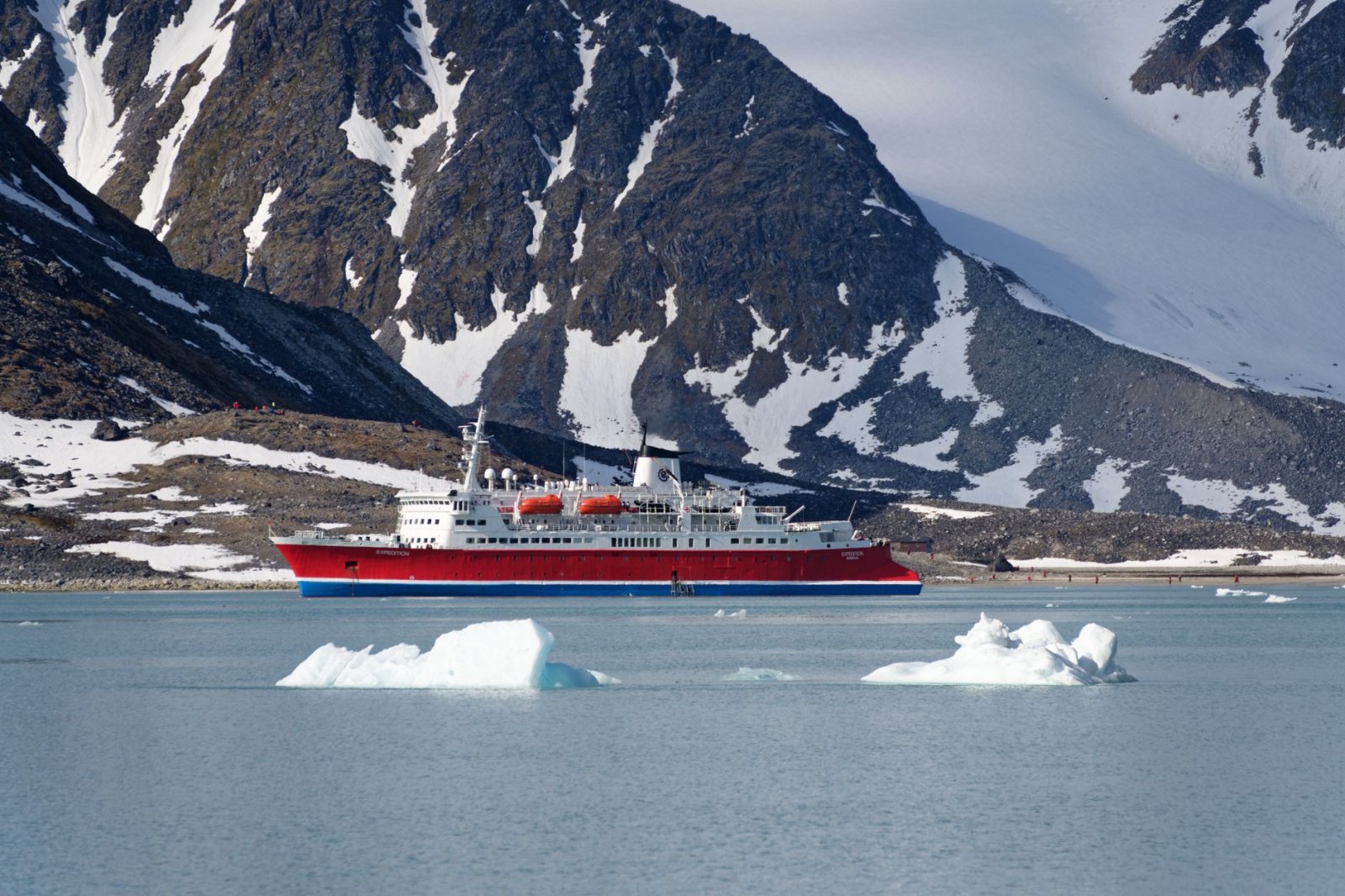
Picture the first morning of an expedition cruise. The ship slides past a glacier, the engines drop to a murmur, and the only sounds are gulls and the hush of cold water against the hull. Whether that morning feels restorative or exhausting depends less on the ship than on the pace of the days that follow. The expedition cruise pace is the rhythm of landings, lectures, meals, and quiet hours, and it shapes how the whole voyage feels.
Pace is not the same as speed. A ship may cover a long distance overnight while passengers spend their days in a slow, unhurried routine. Other itineraries make several landings a day, each requiring boots, layers, and a Zodiac transfer. Both can be well run. The question for most travelers is how much movement and how much stillness suits their own energy, their group, and the kind of memories they want to bring home.
Our advisors often start with that question because the answer narrows the field quickly. Ethos can compare itineraries against your preferred rhythm, rather than leaving you to decode brochure language about “active” and “relaxed” voyages.
Understanding the Expedition Cruise Daily Schedule
An expedition day usually follows a loose structure. Breakfast comes early, often before a morning landing or sail-past. A recap or briefing from the expedition team typically outlines what to expect. Midday brings lunch and time on deck, and afternoons may hold a second landing, a lecture, or an open window with nothing scheduled. Evenings often include a recap of the day’s wildlife or scenery and dinner.
The schedule is shaped by weather, sea conditions, and wildlife, so it can change without warning. A planned afternoon landing may move to the morning if conditions improve. Experienced travelers tend to accept that flexibility as part of the experience, while travelers who need certainty may find it unsettling.
Before booking, ask how the expedition team shares the next day’s plan, usually at the evening recap. Knowing this early helps you judge whether the rhythm will feel calm or fragmented to you.
Gauging Your Expedition Cruise Activity Level
Activity level is the most practical way to judge pace, but most travelers assess it against the wrong benchmark. The question is not whether you can manage a Zodiac landing. It is whether you want to manage several of them, day after day, with the early alarms and layer changes that come with each one. A single landing is easy. Six in four days is a different proposition.
A useful way to self-assess is to separate physical capacity from appetite. Capacity is what your body can do: walking on uneven ground, stepping from a moving Zodiac onto a wet beach, staying on your feet through a long guided walk. Appetite is what you actually want to do on a given morning. Many travelers have the capacity for a high-activity voyage but discover, two days in, that their appetite runs slower. Both matter, and appetite is the one people underestimate.
Think through a typical high-activity day in sequence. An early wake-up call to dress in layers before a briefing. A Zodiac ride to shore. A wet landing where you step into shallow water, or a dry landing onto rocks. An hour or two ashore. The reverse trip back to the ship. A quick change of clothes, lunch, and then a second landing in the afternoon if conditions allow. Add a recap and dinner, and the day is full. None of it is extreme. All of it is cumulative.
A restorative itinerary looks different. It may pair one landing a day with a scenic sail-past, a lecture, or an afternoon on deck with binoculars. Observation from the ship can be a rewarding alternative to going ashore on a wildlife-rich coastline.
Watch out: brochure language about “active” and “relaxed” voyages is not standardized across lines. A line’s “moderate” may include two landings a day, while another line’s “active” means one longer hike. Ask an advisor to translate the specific voyage’s daily pattern rather than relying on the label.
Back-to-back excursions can carry a mental load as well as a physical one, with constant decisions about layers, landing groups, and whether to rest. Building in a slower afternoon every few days can make the voyage feel less demanding. A voyage with optional activities, rather than a fixed schedule where every landing is expected, gives you that room.
Ethos can review a specific itinerary’s landing pattern and match it to how you actually like to spend a day, rather than to how you imagine you might.
How Long Are Expedition Cruise Landings in Practice
Landings vary widely. A Zodiac cruise along a shoreline may be fairly short, while a guided walk ashore, including the boat transfers, can fill most of a morning. Time spent getting into outerwear, waiting for a boat, and returning to the ship often adds up to more than the advertised duration. Plan for the full window, not only the time on land.
The number of landings per day matters as much as their length. Some itineraries pair one major landing with a sea day or a scenic cruise. Others schedule two or three in a single day. Travelers who value unhurried time often prefer fewer, longer stops, because they allow time to notice the details that make a place memorable.
On a Silversea expedition from Svalbard along Greenland to Iceland, one of my favorite moments came from a zodiac rather than a landing. We watched a polar bear mother and her cub playing on the sea ice, and the expedition team was in no hurry to move on. That patience is what an unhurried pace buys you: time to stay with a moment instead of rushing to the next stop.
Ask how many landings are typical on your chosen voyage and whether any are optional. Optional excursions give you control over your own intensity, which is valuable on a multi-day expedition.
Reading an Expedition Cruise Itinerary for Intensity
An itinerary is a pacing document disguised as a destination list. Read it for rhythm, not highlights. The first thing to count is the ratio of landing days to sea days. A voyage with six landing days and one sea day in a week runs hot. A voyage with four landing days and three sea days runs cool. Neither is better. They suit different travelers, and the ratio tells you which one you are looking at faster than any brochure adjective.
Then look at how the landings cluster. Two landings on consecutive days is manageable. Two landings a day for four consecutive days is a different trip, even if the destinations are identical. The intensity lives in the clustering, not the total count. Scan for the days that begin before dawn, the days with a morning and afternoon landing, and the days with a long transit between stops. Those are the days that will ask the most of you.
The sea day deserves more attention than most guides give it. A sea day is not a gap in the itinerary. It is a pacing tool, and it changes what you see. On a sea day, the ship is often crossing open water where wildlife sightings are less predictable, but the light is uninterrupted and the deck is quiet. Photographers tend to value these days because there is no landing schedule competing for the golden hours at dawn and dusk. Travelers who want to watch albatrosses or scan for whales from the deck often find the sea days more memorable than the landings.
There is a real trade-off here. Every sea day you add is a landing you give up. A voyage heavy on sea days offers rest, better light for photography, and a calmer rhythm, but fewer shore experiences. A voyage heavy on landings offers more time ashore but less recovery. The right balance depends on whether you are traveling to see a place up close or to experience the passage between places. Both are legitimate reasons to be on the ship.
Some itineraries list a “scenic cruising” day that reads like a sea day but can be a full day on deck. Read the description, not just the label.
Consider the arc of the voyage as well. The first day or two often carry orientation briefings and safety drills, which add to the sense of activity even before the first landing. The final days may slow as the ship returns toward port. A voyage that front-loads its landings and back-loads its sea days feels different from one that alternates. Reading the full sequence, rather than the highlight list, reveals which pattern you are booking.
Ethos can walk through a specific itinerary day by day and flag where the intensity actually sits, so the rhythm matches the kind of voyage you want. Our expedition cruise planning covers Antarctica, the Arctic, the Galapagos, and French Polynesia, with landing density matched to the way you prefer to travel.
Pacing for Multigenerational Groups and Mixed Energy Levels
Multigenerational voyages bring together travelers with very different stamina, mobility, and interests. A grandparent may want a slow walk and a good lecture, while a teenager may want to be on the first Zodiac of the morning. Successful groups plan for both without forcing either to compromise too much.
Practical strategies help. Choose a ship with a range of optional activities so each traveler can select their own level. Build in free afternoons so no one feels obligated to join every outing. Agree in advance on meeting points and check-in times, so separate schedules do not turn into worry. Our multigenerational family journeys are planned with these mixed rhythms in mind.
Mixed-energy groups often do best with an itinerary that alternates active days with restorative ones. This rhythm gives everyone a chance to recharge. Our advisors can review group needs and suggest voyages where this balance is built into the schedule.
Choosing Your Pace and Booking Your Consultation
The right pace is the one that leaves you feeling refreshed rather than depleted. Start by deciding how many active days you want, how much sea time you enjoy, and how much flexibility you need. Then compare itineraries against those answers. A structured conversation makes this far easier than browsing alone, because the variables interact in ways that are hard to see on a brochure.
Ethos founder Julie Prusak is an ASTA Verified Travel Advisor and CLIA Elite Cruise Counselor, and Ethos can help you translate those preferences into a shortlist of voyages, with realistic notes on landings, schedules, and onboard rhythm. If you are new to working with an advisor, our guide to what working with a luxury travel advisor includes explains how the process works. When you are ready, start planning your journey and tell us what kind of expedition day suits you best.
Frequently Asked Questions
How active are expedition cruise days?
Most expedition days combine one or two shore landings or Zodiac excursions with lectures, lounge time, and open periods on board. Activity varies by itinerary and region. A morning landing may involve a dry landing with a short walk, while a full-day excursion can include longer hikes. Ethos advisors review the typical daily schedule for each voyage so you can match the day’s rhythm to your energy and interests before you commit.
Can travelers choose between active and relaxed excursions?
On many expedition voyages, guests can select from a range of shore options, from gentle walks and observation outings to more demanding hikes. Where the itinerary allows, passengers can opt for a slower landing or remain on board while others go ashore. Availability depends on the vessel, the expedition team, and weather, so it is worth confirming the choices offered on your specific sailing.
Is an expedition cruise suitable for travelers who prefer a slower pace?
Yes, provided you choose the right voyage. Smaller expedition ships with more sea days, fewer daily landings, and a lower-intensity itinerary tend to suit travelers who want time to rest, read, and watch the scenery. Ethos can help you compare the pace of different expedition lines and regions so the trip feels restorative rather than demanding.


