


Filed in Featured Destinations — October 19, 2026
The Taj Mahal’s Older Sister: Why Humayun’s Tomb Belongs Before Agra
Every visitor to India wants to see the Taj Mahal. Far fewer know that its blueprint stands in Delhi, finished some sixty years earlier.
A wife who built for her emperor
Humayun’s Tomb was built in the 1560s and 1570s for the second Mughal emperor. Humayun’s life was a run of reversals. He was driven out of India in 1540, spent some fifteen years in exile, partly at the Persian court, won his throne back in 1555, and died months later after falling down the stairs of his library in Delhi’s Purana Qila.
His widow, Bega Begum, commissioned the tomb. The Taj Mahal tells the story the other way around: an emperor building for his wife. Here, a wife built for her emperor.
What to look for at Humayun’s Tomb
- The first great garden tomb in the subcontinent. The mausoleum sits at the center of a char bagh, a four-part paradise garden whose channels evoke the rivers of paradise: water, milk, wine and honey. The Taj borrows the whole idea.
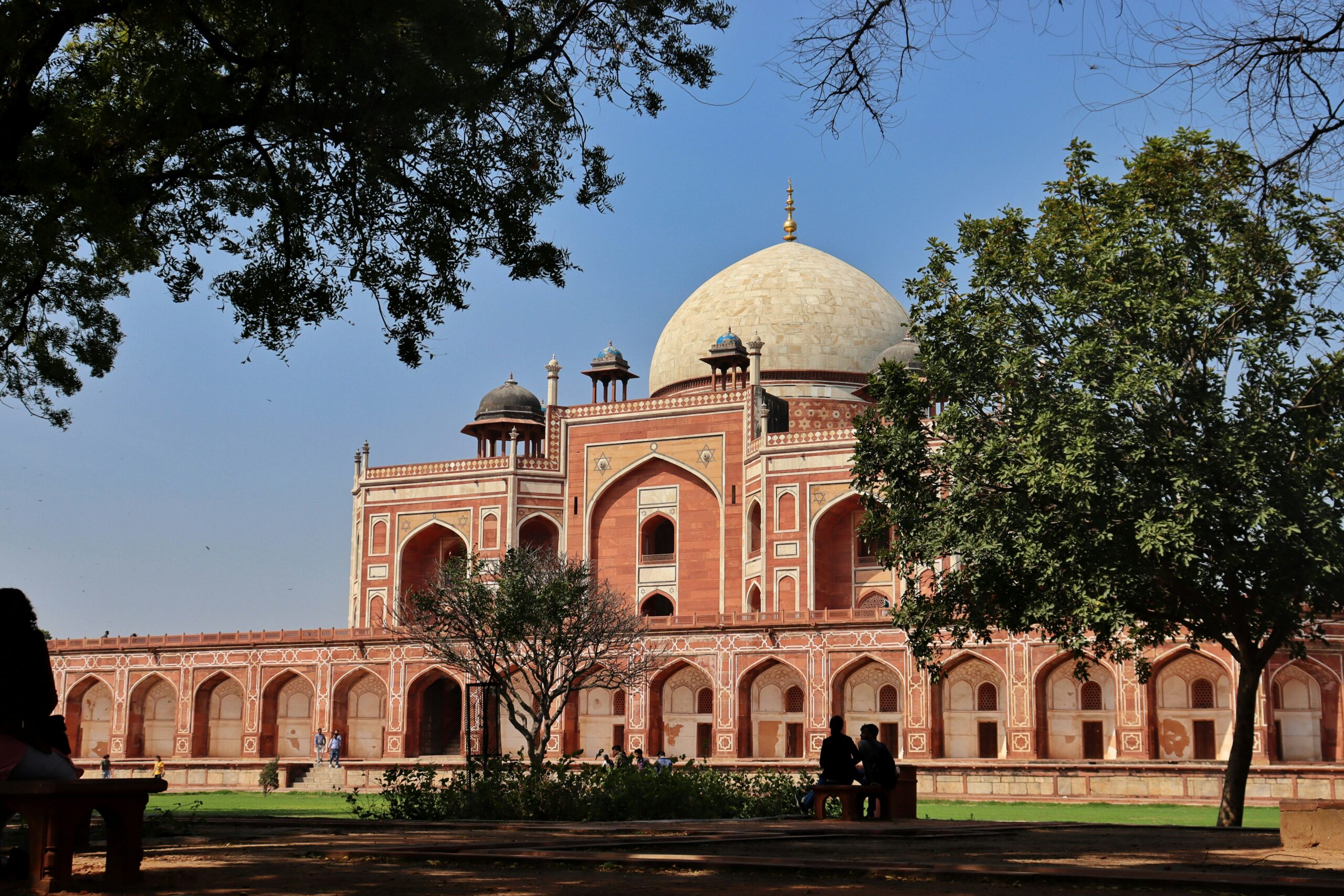
- Red sandstone and white marble. Red sandstone inlaid with white and black marble, under a white marble double dome, designed by a Persian architect.
- Rajput touches. The small domed pavilions on the roof, called chhatris, come from Hindu memorial architecture: an early sign of the Mughal-Rajput fusion that runs through everything that followed.
- The “Dormitory of the Mughals.” Over time the tomb became a family necropolis, with more than 150 burials.
- Isa Khan’s Tomb. Just inside the complex is an octagonal tomb from 1547 to 1548, built for a noble at the court of Sher Shah Suri, the man who drove Humayun into exile.
The whole complex has been a UNESCO World Heritage Site since 1993.
Like your history short, specific and on the ground? That’s what Weekly Wanderlust is: my Friday letter on the places worth your time and how to see them well.
See it before the Taj Mahal
We put Humayun’s Tomb into Delhi itineraries before Agra whenever we can. Seeing the prototype first changes how you see the Taj: you notice what Shah Jahan’s architects kept, what they refined, and what they dared to do differently. Above all, they traded red stone for white.
On our own trip we saw it the other way around, Agra first. I’d reverse it for anyone planning now.
How to visit
- Go in the morning.
- Give it at least ninety minutes.
- Expect calm. It’s far calmer than the Taj.
Building the Delhi-to-Agra order around one more fixed point helps, too: The Taj Mahal Is Closed on Fridays.
Quick answers
Is Humayun’s Tomb older than the Taj Mahal?
Yes. It was built in the 1560s and 1570s, some sixty years before the Taj, and the Taj borrows its garden-tomb plan.
Who built Humayun’s Tomb?
It was commissioned by Humayun’s widow, Bega Begum, and designed by a Persian architect.
How long do you need at Humayun’s Tomb?
At least ninety minutes, ideally in the morning.
More from this trip: The First Thirty Minutes, on what the Oberoi gets right in India, and Moments of Elegance in Chaos.
Want the next one? Weekly Wanderlust is my Friday letter: where I’ve been, what I’d book, and what I’d skip.
Planning India for 2027?
Disclosure: I traveled as a guest of this trip’s partners at trade rates, and I may earn a commission when clients book.
Photo by Sneha Sivarajan on Unsplash


